Movement
Neoclassicism
1750–1850 · 1 artist · 1 work
A return to the plain, balanced forms of ancient Greek and Roman art, in building, sculpture and painting across Europe and America from about 1750. Neoclassicism grew from new knowledge of the ancient world.
MoreLess
The Roman ruins of Pompeii had been discovered, and in 1764 the German scholar Winckelmann published a history of ancient art that had great influence. From about 1750 artists and architects followed Greek and Roman forms closely. They were also turning away from the rich Rococo style that came before. Neoclassical work is clear in outline, balanced and often severe. Sculptors carved ideal figures in marble. In Europe and America the style lasted until about the middle of the 19th century, and some artists kept to it longer. Hiram Powers, an American, settled in Florence in 1837 for its fine marble and skilled stone carvers. He modelled The Greek Slave in 1843, his studio carved six full-size marble versions between 1844 and 1869, and he worked in this manner until his death in 1873. Like the artists of the Italian Renaissance before them, the Neoclassicists measured their work against the art of antiquity.
Works
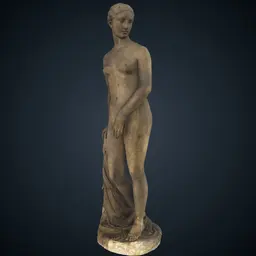
1 workModel of the Greek Slave
Plaster model with metal pins, made in Powers’s studio as a reference for carving marble versions. The scan preserves the plaster surface and its marks.
Model of the Greek Slave sourceModel of the Greek Slave source
Tate, art terms: NeoclassicismGetty Art & Architecture Thesaurus: NeoclassicalSmithsonian American Art Museum: Hiram Powers, Model of the Greek SlaveSmithsonian American Art Museum: Hiram Powers