Artist
Medieval England
1180–1450 · English · 3 works in WOW
No names survive for the makers of Canterbury Cathedral's carved stone screen, Becket windows and the Black Prince's armour, made between 1180 and the 1450s. No maker's name is recorded for these works.
MoreLess
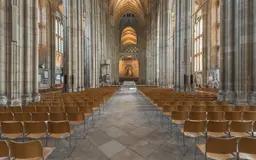
They stand for the masons, glaziers and other craftsmen of medieval England who built and furnished Canterbury Cathedral, from Archbishop Lanfranc's rebuilding of 1070 to 1077 until the Bell Harry Tower was extended in 1498. Masons' marks on the stones still show where they worked. Thomas Becket was murdered in the cathedral in 1170, and thousands of pilgrims came to his tomb. Between 1180 and 1220 glaziers made the Miracle Windows around the site of his shrine in the Trinity Chapel. Eight of the twelve survive. They picture miracle stories written down by Benedict of Peterborough, a Canterbury monk, and are among Europe's best-preserved early medieval stained glass. In 1376 armour was made to hang above the tomb of Edward, Prince of Wales, the Black Prince. In the 1450s masons built the Pulpitum, a carved stone screen with statues of kings. It parted the public nave from the quire, where the monks sang, and with other arches it helps to steady the columns under the great tower.
Where to see their work
1 placeWorks
3 worksThe Pulpitum screen
An intricately carved stone screen at the top of the steps from the nave, built in the 1450s; its statues represent kings. It once separated the public nave from the quire, where the monks of the medieval monastery sang, and with the bracing arches around it helps to steady the massive columns that carry the great tower above.
Crossing / Pulpitum Steps: the tour's own information panelCanterbury Cathedral: Through the ages
The Miracle Windows
Eight stained glass windows, of an original twelve, made between 1180 and 1220, surround the former site of Thomas Becket's shrine in the Trinity Chapel. They picture dozens of miracle stories written down by Benedict of Peterborough, a monk of Canterbury, after Becket's murder in 1170, and are among the best-preserved early medieval stained glass in Europe.
Canterbury Cathedral: The Thomas Becket Miracle Windows Research and Conservation Project
The Black Prince's achievements
Armour made in 1376 to hang in the cathedral above the tomb of Edward, Prince of Wales, known as the Black Prince. It is shown in the exhibition of the cathedral's treasures, which tells how the cathedral has stood in the relationship between Church and state down the centuries.
See something wrong on this page? Report a mistakeOpening soon