Artist · Early Renaissance
Fra Angelico
c. 1395–1455 · Italian · 2 works in WOW
Florentine friar and painter of the Early Renaissance who filled the friary of San Marco and a chapel of Pope Nicholas V with frescoes. Fra Angelico was born Guido di Pietro at Vicchio di Mugello, near Florence, around 1395;
MoreLess
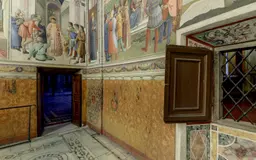
some sources say around 1400. He is first recorded as a painter in 1417, and at about that time he became a novice at the Dominican friary of San Domenico at Fiesole, where he mainly lived and later became prior. His sweet style earned him the name Angelico. By about 1430 he had taken up the new art of Florence. Following Ghiberti's sculpture and Masaccio's painting, he gave his figures weight with clear, natural light, and used linear perspective, lines meeting at a single point, to build convincing space. After 1436 he and his assistants painted about fifty frescoes in the friary of San Marco in Florence, rebuilt with the support of Cosimo de' Medici. In 1448 he was paid for painting the chapel of Pope Nicholas V in the Apostolic Palace, where the lives of the deacon saints Stephen and Lawrence run round the walls in two bands. He died in Rome in 1455, while working for the pope.
Where to see their work
1 placeWorks
2 worksLives of St Stephen and St Lawrence
The frescoes that cover the chapel. They begin on the wall to the right of the altar and run round the room in two bands, setting the two deacon saints side by side from their consecration to their martyrdom. The museum calls the decoration one of the great works of fifteenth-century Italy.
The Diaconal Consecration of St Lawrence
One scene of the cycle, in the lower band to the right of the altar. Lawrence kneels before the pope, who sits among his clergy in a blue cope and tiara, to be made a deacon.
See something wrong on this page? Report a mistakeOpening soon
Vatican Museums: Niccoline ChapelGetty Union List of Artist Names: Angelico, FraNational Gallery, London: Fra AngelicoThe Metropolitan Museum of Art: Fra Angelico (Guido di Pietro), The Crucifixion