Artist · Early Renaissance
Biagio d'Antonio
c. 1446–1516 · Italian · 1 work in WOW
Florentine painter, trained by Cosimo Rosselli, to whom the Vatican Museums give the Crossing of the Red Sea in the Sistine Chapel. Biagio d'Antonio Tucci was born in Florence about 1446, the son of an embroiderer.
MoreLess
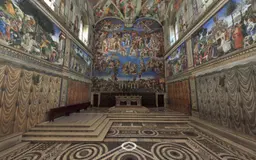
He trained under Cosimo Rosselli and joined the painters' guild, the Compagnia di San Luca, in 1472. After a short partnership with Jacopo del Sellaio he worked in the workshop of Verrocchio. From about the mid-1470s he also worked in Faenza, for religious orders and local officials, and he kept those patrons for many years. In 1481 and 1482 he was in Rome, painting the walls of the Sistine Chapel alongside Perugino, Botticelli, Ghirlandaio and Rosselli. The Vatican Museums name him, with Bartolomeo della Gatta and Luca Signorelli, among the closest assistants of those four masters, and they give the Crossing of the Red Sea to him. The picture gallery of Faenza calls that fresco entirely his own work. In 1504 he sat on the committee of leading Florentine artists that decided where Michelangelo's statue of David should stand. He died in Florence in 1516. In the 19th and 20th centuries his paintings were confused with those of another painter, Giovanni Battista Bertucci.
Where to see their work
1 placeWorks
1 workThe Crossing of the Red Sea
The escape through the Red Sea occupies the third surviving panel of the Moses cycle. The Vatican Museums give this fresco to Biagio d’Antonio.
The Crossing of the Red Sea sourceThe Crossing of the Red Sea source
See something wrong on this page? Report a mistakeOpening soon
Vatican Museums: Sistine Chapel, Stories of MosesGetty Union List of Artist Names: Biagio d'AntonioPinacoteca Comunale di Faenza: Biagio d'AntonioVatican Museums: Sistine Chapel