Artist · Early Renaissance
Sandro Botticelli
c. 1445–1510 · Italian · 4 works in WOW
Florentine painter of the Renaissance, known for graceful line and for large mythological pictures such as Primavera and The Birth of Venus. Sandro Botticelli was born in Florence around 1445 as Alessandro Filipepi, the son of a tanner.
MoreLess
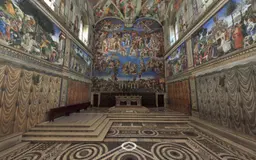
His nickname comes from a word for a small wine cask. He is thought to have trained first with a goldsmith and then with the painter Fra Filippo Lippi, and by 1470 he had his own workshop. For most of his life he worked for the Medici family and their circle. In 1481 the pope called him to Rome to help paint the walls of the Sistine Chapel, with Perugino, Ghirlandaio and Cosimo Rosselli. He painted the Temptations of Christ and two scenes from the life of Moses, and portraits of early popes. It is the only time he is known to have worked outside Florence. Between about 1478 and 1490 he painted scenes from ancient myth, among them Primavera and The Birth of Venus, with a flowing, decorative use of line. In the troubled 1490s his pictures became plainer and intensely religious. He died in Florence in 1510, and his name was almost forgotten until the late 1800s.
Where to see their work
1 placeWorks
4 worksThe Temptations of Christ
The north-wall Christ cycle continues with the temptations, combining related moments within one painted setting.
Scenes from the Life of Moses
Moses appears at different moments in one landscape, including his defense of Jethro’s daughters and the burning bush.
The Punishment of Korah, Dathan and Abiram
The rebellion against Moses and Aaron is represented in multiple episodes within an architectural landscape.
St Sixtus II
St Sixtus II, one of the early popes painted in the chapel in 1481 and 1482, identified by his place in the series: high on the north wall, on the altar side of its sixth window.
See something wrong on this page? Report a mistakeOpening soon
Vatican Museums: Sistine ChapelGetty Union List of Artist Names: Sandro BotticelliNational Gallery, London: Sandro BotticelliUffizi Galleries: Birth of VenusVatican Museums: Sistine Chapel, PontiffsVatican Museums: Sistine Chapel, St Sixtus II